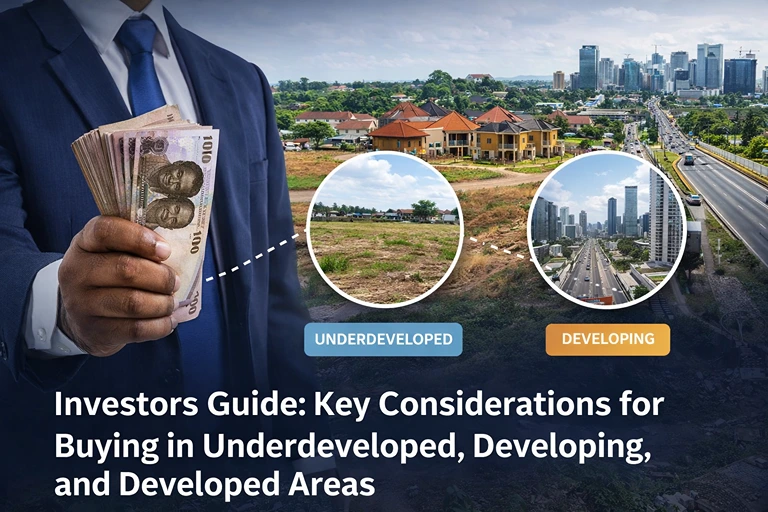
Let’s take a look into the real estate market not from hype or hearsay, but from a place of understanding what really drives the Nigerian property investment. The real estate market doesn’t move randomly, it responds to trends you can track if you know what to look for. It all comes down to economic signals and structural indicators.
In this article, let me walk you through the key indicators you should watch out for as a property investor, developer, or future homeowner in Nigeria.
1. Infiation Rate: Is your money losing value?
Inflation measures how fast prices are rising in the economy. when it’s high, everything becomes expensive from building materials to labor which directly increases construction costs. High inlation erodes purchasing power. your question should be: “Is my money losing value in the bank, or growing in assets?” when people have less real value in their money, they may delay or cancel buying decisions, reducing demand for properties. However, real estate is one of the best ways to preserve wealth during inlation, as land and housing tend to appreciate over time
2. Interest Rates: can people aford to borrow and build?
An interest rate is the cost of borrowing money from a financial institution. It determines how much extra you pay on loans, mortgages, or developer financing. High interest rates make it expensive to borrow. For buyers, it means higher monthly mortgage payments. For developers, it increases the cost of financing projects.
So, interest rates impact both the demand and the supply side of the real estate market. If rates go up, buyers hesitate, and builders slow down. If rates go down, more homes are built and more people buy.
3. Exchange Rate: what’s the Naira doing against the Dollar?
The exchange rate inluences everything imported from roofing sheets to elevators. A weaker Naira means higher prices for imported materials, pushing construction costs up.
But there Is another side to it. For diaspora investors earning in dollars, a weaker naira makes investing in Nigerian properties more afordable, which can increase foreign interest.
4. purchasing power parity (ppp): what can income actually buy?
PPP compares the buying power of income across regions. In Nigeria, low ppp means that many people can’t afford high-end properties, even if prices seem “reasonable” on paper. This is why smart developers focus on afordable housing, lexible payment plans, and rental models that match income levels.
5. Demographic Trends and structure: who are you building for?
Nigeria is a young country that has over 60% of the population is under 25. This means we have a massive wave of future homeowners and renters coming. Also, urban migration is increasing. people are moving into cities like Lagos, Abuja, Ibadan, ogun, Ilorin, and Uyo creating pressure on housing supply and driving up demand.
Real estate follows people. Follow the population, and you’ll follow the profit.
6. unemployment Rate: Are people earning enough to buy or rent?
Let’s keep it simple: when people have jobs, they buy homes or rent better ones. when unemployment is high, demand for real estate property drops.
This is why property near economic centers where jobs are being created remains in high demand.
7. Government spending and Infrastructure: where is development happening?
Every smart investor watches infrastructure news closely. why? Because wherever the government builds roads, rails, seaports, or airports property prices go up.
Think of the Lekki-Epe corridor, the new international airport in Ogun, or the Lagos-calabar coastal Highway. These kinds of projects turn nearby “bushes” into boomtowns. Before you buy, ask: Is this area attracting businesses, factories, tech startups, or schools? If yes, the market has demand.
8. Government Policies & statutory Laws:
Are the rules supporting growth or creating risk? From national housing schemes to land reforms and tax incentives, government policy directly inluences the real estate environment.
For instance:
- Policies that support mortgages and first-time buyers increase demand.
- state-level reforms like digital land registries improve transparency and reduce fraud.
- statutory laws like the Land use Act give state governors authority over land, so understanding land titles, excision, c of O, and planning approvals is critical.
9. Mortgage Access and credit system: can buyers pay in installments?
Most Nigerians can’t pay millions upfront. That’s why access to mortgages, co-operative financing, and developer-backed installment plans is becoming a game changer.
The easier it is to access housing finance, the higher the demand for property. As an investor or developer, think beyond “outright payment.” consider partnering with mortgage institutions, ofering structured payment plans, building trust with clients through lexible terms.
10. Real Estate’s contribution to GDP: Is the sector itself growing?
A rising share of real estate in national GDP means more investment, more construction, and more recognition for the sector’s role in economic growth.
As of recent data, real estate contributes 5-7% to Nigeria’s GDP. If this number increases, it signals a thriving sector.
Final Thoughts: Don’t invest blind, buy with insight
If you’re ever unsure about the next step whether to buy, wait, or sell that’s why I am here. Let’s talk. Let’s plan. Let’s build your real estate future with confidence.